
Composite vs. Pressure-Treated Decking in Fort Collins, CO
The most consequential decision most Fort Collins homeowners face during deck planning is not about size, layout, or railing style. It is about material. Composite or pressure-treated wood.
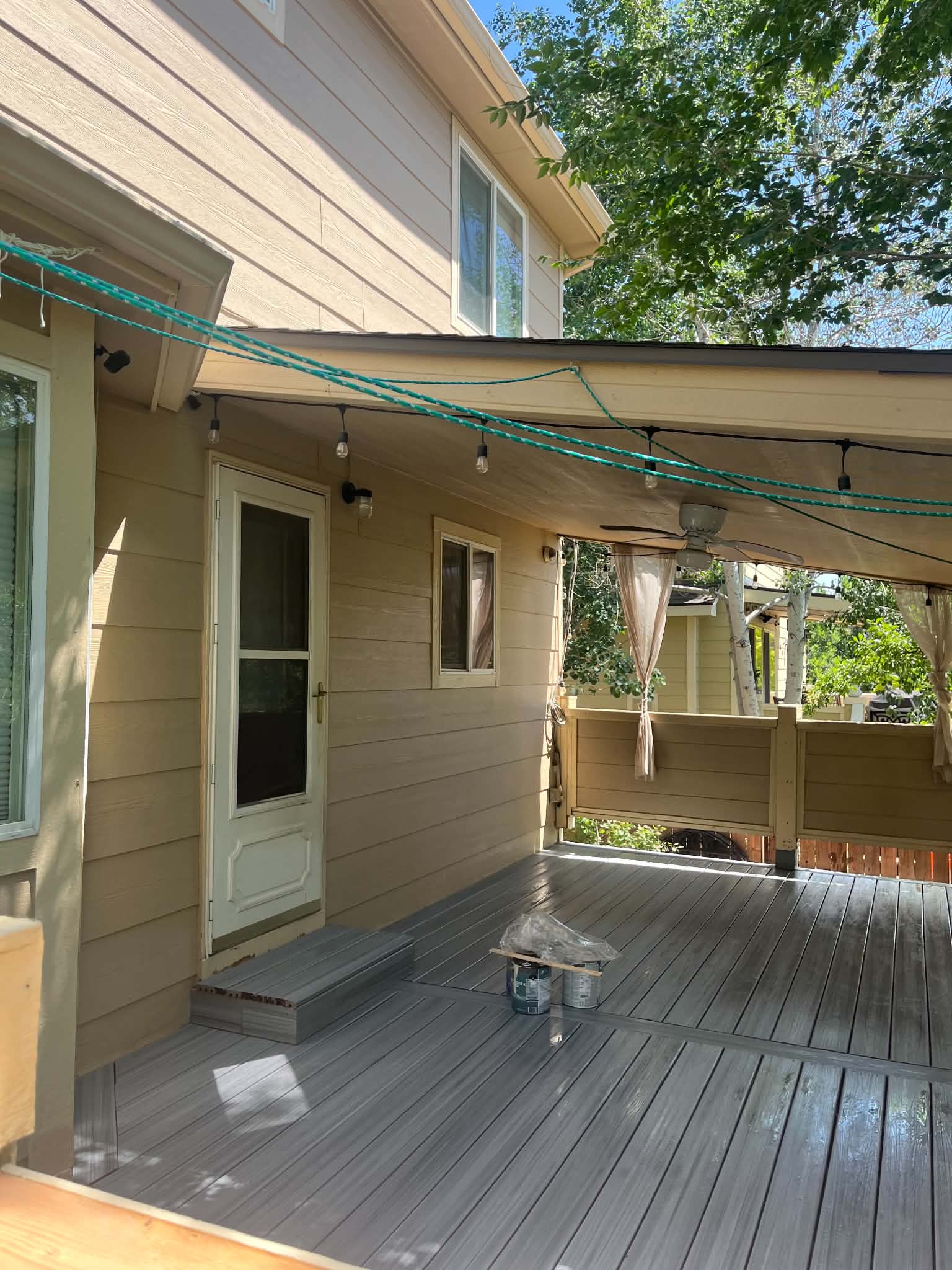
The right answer is not the same for every homeowner, and any contractor who gives you a blanket recommendation without reviewing your specific situation is either oversimplifying or steering you toward a margin. The decision depends on how long you plan to stay in the home, what you are willing to spend upfront, how much ongoing maintenance you are realistically willing to manage, and how Fort Collins-specific climate conditions affect each material's long-term performance.
This article covers both materials with specific attention to Northern Colorado conditions. If you are in early planning and want a licensed deck builder to review your property and provide a clear cost breakdown for both options side by side, Flicker Construction LLC offers free on-site estimates with no obligation at flickerconstructionllc.com/deck-builder.
What Composite Decking Actually Is
Many homeowners enter the planning process with a general understanding that composite is a "low-maintenance" material without fully understanding what it is made of or why it performs the way it does.
Composite decking is an engineered product, typically manufactured from a combination of reclaimed wood fiber and recycled plastic polymers, compressed and formed under high heat and pressure into board profiles. The resulting material is dense, dimensionally stable, and engineered specifically to resist the moisture infiltration, UV degradation, and freeze-thaw cycling that breaks down natural wood surfaces over time.
Modern composite products fall into two primary categories: uncapped and capped. Uncapped composite is an older-generation product. Capped composite, which represents the majority of what is installed in residential applications today, has a protective polymer shell wrapping the core on three or four sides. That shell is what provides resistance to staining, fading, and moisture absorption. Without the cap, composite boards are meaningfully more vulnerable to surface damage.
Premium capped composite products from established manufacturers are specifically engineered for high-UV, high-altitude environments with wide seasonal temperature variation. Fort Collins sits at approximately 5,000 feet of elevation. That elevation increases UV intensity compared to lower-altitude markets, and it is a real factor in how both composite and wood surfaces perform over time.
What Pressure-Treated Lumber Actually Is
Pressure-treated lumber is solid wood, most commonly southern yellow pine, that has been treated under pressure with chemical preservatives to resist rot, fungal decay, and insect damage. The treatment process forces preservative compounds deep into the wood's cellular structure, allowing pressure-treated lumber to be used in ground-contact and near-ground applications where untreated wood would deteriorate rapidly.
The current standard for residential deck construction uses alkaline copper quaternary (ACQ) or copper azole treatments, both of which replaced older chromated copper arsenate (CCA) formulations phased out for residential use in 2003. Modern pressure-treated lumber is safer than older-generation products and is the standard framing material in residential deck construction across the country.
Pressure-treated decking is not an inferior product. It is a proven construction material with a decades-long residential track record and well-understood performance characteristics. The relevant consideration is not whether pressure-treated lumber is a good material. It clearly is. The relevant consideration is what it requires from the homeowner over time and how it responds to Fort Collins climate conditions specifically.
How Fort Collins Climate Affects Each Material
Northern Colorado's climate is more demanding on outdoor building materials than most homeowners realize when they first start the planning process.
Fort Collins experiences four genuinely distinct seasons. Summers bring high UV radiation, intensified by elevation. Temperatures routinely exceed 90 degrees Fahrenheit in July and August. Winters bring hard freezes, periodic heavy snow loads, and rapid temperature swings where a single day can move 40 or more degrees in either direction. Spring brings significant moisture from snowmelt and rainfall. And the region's characteristically low humidity for much of the year means wood cycles through wet and dry states repeatedly within a single season.
For pressure-treated lumber, this climate pattern accelerates the natural aging process in ways that are visible within a few years of installation without proper maintenance. Wood expands when it absorbs moisture and contracts when it dries out. Fort Collins conditions cycle lumber through this expansion and contraction process repeatedly throughout the year. Over time, this cycling produces checking (small surface cracks that run along the wood grain), warping, cupping, and, in boards that are not properly and regularly sealed, progressive surface degradation.
This does not mean pressure-treated wood fails prematurely on Fort Collins properties. Well-maintained pressure-treated decks in this climate perform well and last for many years. The critical word is maintained. Colorado's climate demands more active maintenance from wood decking than milder markets.
For composite decking, the engineered structure is specifically designed to absorb and resist this kind of environmental cycling. Capped composite boards maintain dimensional stability across significant temperature and moisture changes. The UV-resistant polymer shell on capped products substantially slows the surface fading that Colorado's high-altitude sun accelerates on exposed materials. Composite does not require sealing, staining, or annual treatment. The maintenance requirement is limited to periodic cleaning to remove pollen, organic debris, and surface buildup.
The True Cost of Each Material Over 15 Years
Upfront cost comparisons between composite and pressure-treated wood consistently favor pressure-treated lumber, and the gap is real. Composite decking materials typically run 30 to 50 percent more per square foot than comparable pressure-treated lumber. On a project in the $10,000 to $12,000 range, that difference can represent $2,000 to $4,000 in material costs depending on the specific products selected.
What that comparison omits is the ongoing cost structure that develops over time.
A pressure-treated deck in Fort Collins requires sealing or staining on a one-to-three-year cycle to maintain surface integrity and resist moisture penetration. The specific interval depends on board exposure, finish type, and how aggressively the deck is used. A professional sealing and cleaning on a 400-square-foot deck can run $300 to $700 depending on scope, surface preparation required, and current labor rates. If you defer that work and deal with surface degradation, refinishing costs increase.
Over a 15-year period, routine maintenance on an average-sized pressure-treated deck can accumulate $2,000 to $4,500 in cumulative cost for materials and professional labor, in addition to the time associated with scheduling and managing the work. That figure narrows the real cost gap between composite and pressure-treated significantly.
Composite decking's ongoing maintenance cost is limited primarily to occasional cleaning, which most homeowners handle themselves with standard household tools and minimal product cost.
This analysis does not make composite the automatic financial choice for every homeowner. If you are planning to sell within four to five years, the upfront cost premium on composite may not be fully recovered through resale value. If your primary constraint is the initial project budget, pressure-treated lumber delivers a durable, well-built deck at lower entry cost. The point is that the long-term cost comparison is substantially closer than the initial price difference suggests, and ignoring maintenance costs when comparing materials produces a misleading financial picture.
Appearance and Color Stability: What to Expect From Each
Pressure-treated lumber has a natural wood appearance that many homeowners strongly prefer. It accepts stain and paint well and can be finished to match a specific aesthetic. Unstained pressure-treated wood grays over time as surface wood fibers weather, producing the silver-gray patina associated with aged wood decks. Whether that appearance is a problem or not is a subjective question, but it does require active management if you want to maintain the original wood tone.
Composite decking does not gray in the same way. Capped composite maintains color stability over time, though prolonged direct sun exposure can produce some gradual lightening over many years. Current-generation composite products are substantially more color-stable than products installed a decade or more ago. Homeowners who evaluated composite years ago and decided against it based on early fading concerns may want to revisit that evaluation. The technology has improved considerably.
Composite is also available in a wide range of colors and grain profiles, including options that closely approximate the appearance of natural wood. The look is not identical to solid wood in close inspection, but the gap has narrowed significantly with current product lines.
Structural Framing: An Important Clarification
One point that causes confusion in homeowner-to-homeowner conversations about decking materials: the surface decking and the structural frame are separate material decisions.
Regardless of whether you choose composite or pressure-treated surface boards, the structural frame beneath, including posts, beams, and joists, is typically built from pressure-treated lumber. Ground-contact rated pressure-treated lumber is required by building code for posts, footings, and any framing in proximity to soil, concrete, or persistent moisture. This is a code requirement, not a builder preference.
When a homeowner chooses composite decking, they are selecting the surface boards that face the weather and bear foot traffic. The structural system that supports those boards is still pressure-treated lumber in standard residential deck construction. Understanding this distinction is important when comparing total material costs between the two options.
Working With a Licensed Deck Builder in Fort Collins
Whether you choose composite or pressure-treated surface decking, the material decision is one component of a deck that performs well for 20 or more years in Fort Collins. Proper footing depth for Colorado's frost line, code-compliant ledger attachment to your home, correct joist spacing for composite or wood boards, railing compliance, and stair construction all affect whether the structure performs and passes inspection.
These details are not worked out during the build. They are designed and planned before the first footing is poured.
Flicker Construction LLC is a licensed and insured deck builder serving Fort Collins, CO and the surrounding Northern Colorado communities. We provide free on-site estimates that cover both material options with clear, itemized pricing so you can make an informed decision before committing. You work directly with the builder throughout the project from the first site visit to the final walkthrough.
If you are ready to move forward or just want a real number to work with, book your free estimate at flickerconstructionllc.com/deck-builder or call (970) 238-5244 today.
Frequently Asked Questions: Composite vs. Pressure-Treated Decking in Fort Collins
Ready to start planning your deck?
Let's discuss materials, design, and get you a clear estimate for your Fort Collins property.
Get a Free Estimate